Listening In: The Quiet Obsession of Checking Someone's Spotify Activity

Photo by Photo by Rob Hampson on Unsplash on Unsplash
You've done it. Don't pretend you haven't. Maybe it was an ex, maybe it was a coworker you're lowkey curious about, maybe it was that person from the party whose energy you couldn't quite place. You opened Spotify, searched their username, and just... looked. What were they playing at 2 a.m. last Tuesday? Are they still on that sad-girl folk kick, or have they moved on? Is that breakup playlist still getting streams?
This is the new normal. And somehow, nobody's really talking about how deeply weird — and deeply human — it is.
The Profile Is the Person
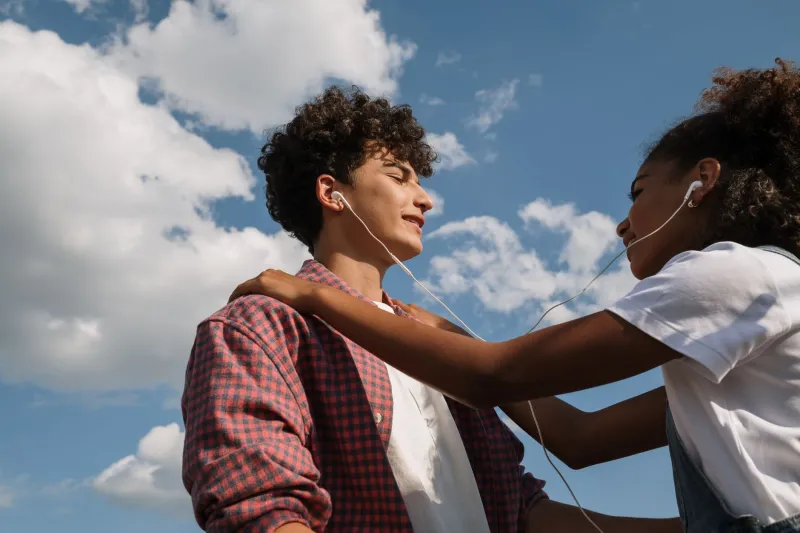
Here's the thing about music taste: it's always been identity. The band tee you wore in high school, the aux cord you guarded with your life, the playlist you made for a road trip you hoped would say something about you without you having to say it out loud. Music is how a lot of us perform who we are, especially when words feel too direct.
Spotify just made that performance public. And searchable. And real-time.
When you scroll through someone's recent activity — their last played album, the playlist they've been building, the artist they've had on repeat for three weeks — you're not just seeing data. You're reading them. Their current mood, their nostalgic spiral, their 3 a.m. headspace. It's more revealing than most people's Instagram grids, and way more revealing than anything they'd tell you at brunch.
Psychologists have long noted that music preference is one of the fastest ways humans assess compatibility and character. A 2015 study out of Cambridge found that musical taste correlates with personality traits in surprisingly consistent ways — openness, agreeableness, emotional depth. When you're scrolling through someone's recent listens, you're basically running an informal personality assessment. And you know it.
The Etiquette Nobody Wrote Down
So what are the rules here? Genuinely, nobody knows. That's part of what makes it so fascinating.
Unlike reading someone's tweets or scrolling their Instagram, checking a Spotify profile exists in this gray zone of social accountability. There's no like button, no view count, no notification that says "hey, your coworker Jamie checked your activity at 11:47 p.m." It's voyeurism with a clean getaway. Which is exactly why people do it so freely — and why it feels slightly illicit even when it's technically allowed.
The unspoken etiquette seems to be operating on a few unwritten tiers. Checking a close friend's profile? Totally fine, that's basically just keeping up. Checking a new romantic interest to see if they have taste? Acceptable, if a little anxious-attachment coded. Checking an ex's listening history to emotionally decode whether they're doing okay? Murky. Checking a person you've spoken to exactly twice because you're curious if they're a Phoebe Bridgers person or a Sabrina Carpenter person? That's where we start to enter territory that would make your therapist tilt their head.
And yet. We all do some version of all of these.
What You're Actually Looking For
Let's be honest about the motivation here, because it's almost never purely casual. People check Spotify profiles for the same reason they check someone's tagged photos or read old tweets — they want information that the person hasn't volunteered. They want a side door into someone's interior life.
Sometimes it's romantic. You're trying to figure out if this person has depth, or if their entire personality is based around vibes. A carefully curated playlist titled "late nights" hits different than a top 40 shuffle. You're triangulating.
Sometimes it's competitive. Did your ex move on to better music after you broke up, or are they still playing the same playlist you two shared? (There's a whole separate psychological rabbit hole about shared playlists and breakups, but we'll save that for another day.)
Sometimes it's just curiosity, the same low-grade nosiness that makes humans social creatures in the first place. You want to know what's going on inside someone's head, and music is the closest thing to a direct line.
Spotify Knows What It's Doing
It would be naive to think this feature exists by accident. Spotify has made deliberate choices about what's visible, what's private, and how easy it is to find someone's profile. The social layer of the app — Friend Activity, public playlists, real-time listening status — isn't a bug. It's a feature designed to increase engagement and time spent in the app.
And it works, because it taps into something primal: the desire to know people, really know them, beyond the curated surface they present. In an era where social media has become increasingly polished and performative, a real-time Spotify feed feels almost raw by comparison. Nobody's staging their 2 a.m. Mitski relapse for the algorithm. It's just... happening. And that authenticity, however accidental, is magnetic.
The flip side? Some people have caught on and started treating their Spotify profiles as extensions of their personal brand. Curating not just what they listen to, but what they want to be seen listening to. Public playlists with titles that feel like personality statements. Niche artist choices that signal cultural awareness. The performance layer is creeping in here too, slowly but surely.
The Intimacy Problem
Here's where it gets genuinely complicated. Music is one of the most emotionally intimate things we consume. The songs someone plays when they're grieving, processing, falling for someone, falling apart — those aren't things most people would share freely in conversation. But they're sitting right there, visible to anyone with a Spotify account and a few seconds to spare.
There's an argument that this visibility is a kind of consent — after all, the app gives you the option to go private. If you haven't flipped that switch, you've implicitly agreed to be seen. But that logic assumes everyone is equally aware of how much their profile reveals, and that's a stretch. A lot of people turned on Friend Activity for the fun of seeing what their friends were playing and never thought about the reverse.
So we're left with this odd social contract: a platform full of people broadcasting their most honest emotional states to anyone who knows their username, while maintaining the polite fiction that nobody's actually looking.
We're All Listening
At the end of the day, the Spotify profile check is a deeply modern ritual — part social intelligence gathering, part emotional curiosity, part the same impulse that made humans sit around fires and tell each other stories about the people in the next village. We want to understand each other. We want connection. And if the algorithm serves up a shortcut to that, of course we're going to take it.
Just maybe close the app before you accidentally follow them. That's where it gets awkward.