Collaborative Playlists Are the New Joint Bank Account — and Breakups Are Getting Messy

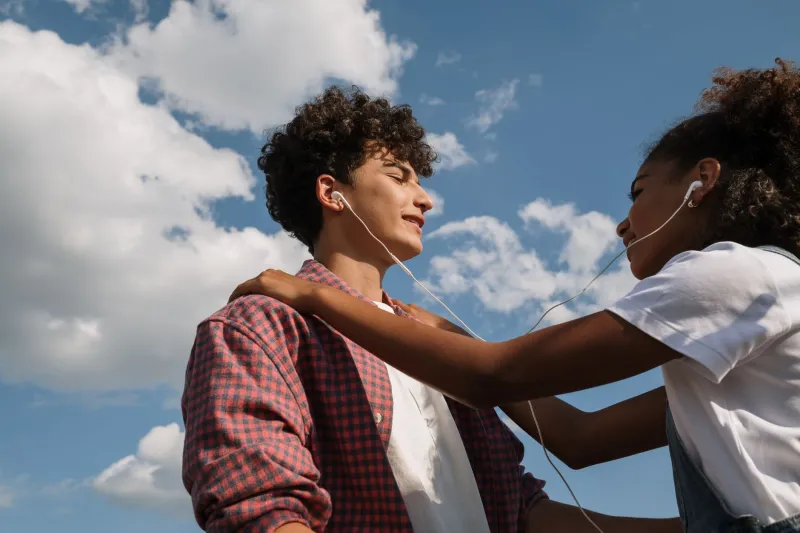
Photo by Photo by Fotos on Unsplash on Unsplash
There's a moment in a lot of modern relationships that doesn't get nearly enough credit. It's not the first date or the first trip together. It's the moment one person says, hey, I added you to a playlist. That's it. That's the confession. And somehow, everyone knows exactly what it means.
Shared Spotify playlists have quietly become one of the most loaded gestures in 21st-century romance — a living, scrollable record of a relationship's emotional timeline. You add a song when you're giddy. You add another when things get complicated. You add one more when you're trying to say something you don't have the words for yet. By the time you're six months in, that playlist isn't just a collection of tracks. It's a document.
And like any important document, people are starting to treat it accordingly.
The Honeymoon Phase Has a Soundtrack Now
Ask anyone who's been in a relationship in the last five years and they'll probably tell you about the playlist. Not a playlist — the playlist. The one with the inside-joke title, the 47 songs, the weird transition between that one Phoebe Bridgers track and a random Drake deep cut that only makes sense if you were there for that specific Tuesday night.
During the early stages of a relationship, collaborative playlists function almost like a love language. Relationship therapist Dana Morales, who works with couples in New York and Chicago, says she's seen playlist-building come up more and more in sessions. "It's a form of emotional disclosure that feels lower stakes than a direct conversation," she explains. "Adding a song is a way of saying this is how I feel right now without having to be fully vulnerable about it."
That lower-stakes quality is part of what makes it so addictive. You're not writing a letter. You're not having a talk. You're just... adding Mitski to a shared queue at 11pm and hoping they notice.
And they always notice.
Every Song Is a Timestamp
Here's what makes these playlists genuinely different from a mixtape or even a private listening history: they're collaborative. Both people are building it. Both people can see who added what. Spotify doesn't hide that metadata — your name sits right there next to your song choices like a signature.
That transparency turns a playlist into something closer to a diary with two authors. Scroll back through a long one and you can trace the arc of a relationship almost to the week. The early songs are usually bright, a little performative — look at my taste, look at how well I know you already. Then things settle into something more honest. More specific. The songs get weirder, more personal, less concerned with impressing.
Some couples even develop what you might call playlist archaeology — the habit of going back through old additions to reconstruct what was happening emotionally at a given time. "I can tell you exactly what was going on in my relationship based on what I added in March versus what I added in August," says Priya, a 28-year-old from Atlanta who's been with her partner for three years. "It's basically a mood journal that I didn't know I was keeping."
That's not an accident. It's just what happens when music is woven into daily emotional life — the songs absorb context like a sponge.
When Someone Removes Your Songs
Now for the part nobody talks about in the honeymoon phase: what happens when things go sideways.
Breakups have always been brutal, but the collaborative playlist introduces a specific new category of hurt. Unlike a text thread you can mute or a photo album you can archive, a shared playlist is actively maintained. Songs can be removed. The order can be changed. And if one person still has edit access after things fall apart, the playlist becomes contested territory in a way that feels almost legal.
"I had a client who described her ex removing her song additions from their shared playlist as feeling like being erased," Morales says. "She wasn't being dramatic. That playlist was genuinely a record of her emotional investment in the relationship, and watching it get edited hurt in a very real way."
Social media is full of people describing this exact phenomenon — the quiet devastation of opening a playlist you built together and finding a song you added just... gone. No explanation. No conversation. Just deleted, like it never happened.
Some people have started screenshotting their playlists before breakups. Others are copying the track lists into notes apps. A few have started making private duplicate versions before the relationship officially ends, just to preserve the record.
If that sounds extreme, consider what they're actually trying to protect: proof that something real happened. Proof that those feelings existed and were documented in real time, song by song.
The Prenup Nobody Signed
What's fascinating — and a little absurd, in the best way — is that nobody sat down and decided collaborative playlists would carry this much emotional weight. There was no announcement. Spotify didn't add a terms-of-service clause about heartbreak. It just... evolved.
But now that it has, some couples are getting surprisingly intentional about it. A growing number of people describe having actual conversations about what happens to a shared playlist if things end. Who keeps it? Does one person get removed? Is it archived, or does it stay live?
These aren't hypothetical conversations happening in some niche corner of the internet. They're showing up in Reddit threads, in group chats, in therapy sessions. The playlist has become real enough that people feel the need to negotiate around it.
"It's genuinely one of the more interesting cultural shifts I've seen in how people document relationships," says Morales. "We've always used objects and rituals to mark emotional milestones. This is just the version that lives in your phone and updates in real time."
What You're Really Building
Maybe the most honest way to think about a collaborative playlist is this: it's a record of who you were together, assembled in the moment, without the distortion of nostalgia. Unlike a photo, it wasn't staged. Unlike a journal, it wasn't written with an audience in mind. It was just two people adding songs because the songs felt right, and the accumulation of those choices turned into something that outlasts the relationship itself.
That's kind of beautiful, even when it's painful.
So yeah — add the song. Add the weird one that's hard to explain. Add the one that says the thing you haven't said out loud yet. Just maybe screenshot the playlist first.
Because at some point, that collection of tracks stops being about music and starts being about memory. And memory, as it turns out, is worth protecting.