Features Are the New Handshake: Inside Music's Collab-First Era
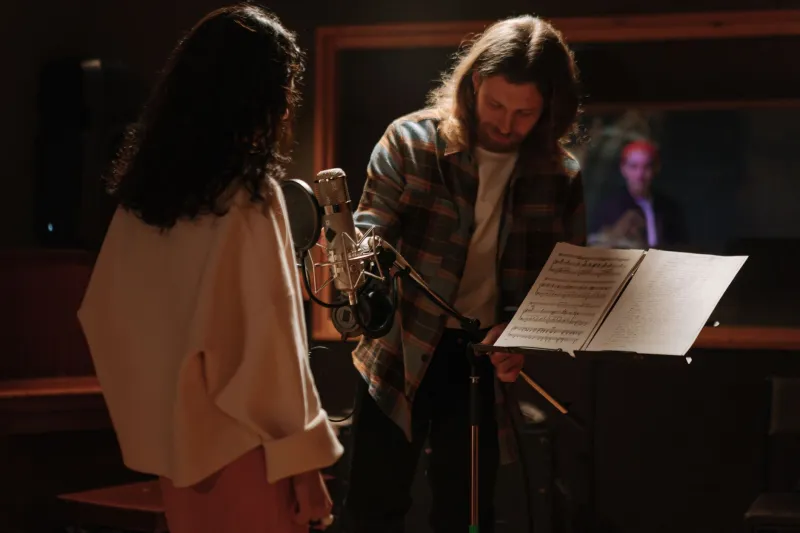
There was a time when a feature credit felt like a special occasion — a label-approved team-up between two artists who genuinely vibed, dropped at the right moment, usually to break a new act or revive a legacy one. It was a tool, but a subtle one. Something reserved.
That era is over.
In 2024, the feature is the strategy. It's the pitch deck, the press release, and the streaming hack all rolled into one credit that reads "ft." Artists aren't just collaborating — they're building entire discographies around high-profile co-signs, stacking guest verses the way a startup stacks investors. And if you're an emerging artist trying to cut through the noise? A well-placed feature might be the most efficient move you can make.
From Artistic Moment to Strategic Asset
Let's be clear: collabs have always carried weight. Think back to Jay-Z and Kanye's Watch the Throne, or how a Nicki Minaj verse could make a mid-tier record a radio smash overnight. The difference now is intentionality — and scale.
What changed is the math. Streaming platforms have made it painfully transparent how collaboration affects discovery. When you drop a track with a bigger artist, you immediately get exposure to their entire listener base. Spotify's algorithm reads that co-sign and starts slotting your music into playlists it wouldn't have touched otherwise. Apple Music's editorial team takes notice. You trend on TikTok because their fans are curious. The ripple effect is measurable in a way it never was during the CD era.
Emerging artists figured this out fast. And now, rather than building a solo catalog first and collaborating later, many are doing it the other way around — using features to build the catalog, treating every guest spot as a business card and every hook as a networking event.
The Feature as Social Currency
Here's where it gets interesting from a culture standpoint: features aren't just about streams anymore. They're about proximity and perception.
If you're a rising rapper from Atlanta and you land a verse from a Grammy-nominated artist on your debut project, you're not just borrowing their audience — you're borrowing their credibility. In an industry where gatekeeping still exists even as it pretends not to, that association matters. It tells listeners, labels, and press outlets that someone with taste already vetted you.
This is why the feature economy runs so deep on social media. When Cardi B or Future shows up on an emerging artist's project, the announcement alone drives engagement. The Instagram post gets shared. The TikTok snippet goes viral before the song is even out. The announcement of the feature is its own content moment.
And artists know it. Which is why negotiations around features have gotten increasingly strategic — almost transactional in ways that would've felt uncomfortable to say out loud five years ago.
The Rise of the Feature-First Discography
Spend any time on music Twitter (or X, if you insist) and you'll notice a specific type of discourse: fans debating whether an artist "made it" on their own or "needed" a feature to pop. It's a real tension.
Because here's the thing — some artists have essentially built their entire brand around being a great collaborator rather than a standalone star. Their best-known songs all have a "ft." in the title. Their Spotify page looks like a guest list. And that's not necessarily a criticism anymore. In a fragmented attention economy, being the person everyone wants on their record is a legitimate lane.
Think about producers who crossed over to artist status by racking up feature credits first. Think about vocalists whose hooks became more famous than their solo work. The collab-first career path is real, it's intentional, and increasingly it's respected.
The question that's starting to surface, though, is sustainability. What happens when the features slow down? When the bigger artists move on to the next wave of talent? The solo catalog has to eventually stand on its own, and artists who've leaned exclusively on the collab economy can find themselves in a weird spot — famous-adjacent but not quite famous enough.
What Algorithms Actually Reward
Streaming platforms aren't neutral here. They have a vested interest in content that performs, and features tend to perform. Collaborative tracks often see higher save rates, more playlist adds, and stronger skip-rate metrics — all signals the algorithm uses to determine whether to push a song further.
Spotify's Collaborative Playlists and shared listening features lean into this social dimension. Apple Music's friend activity. Even YouTube's recommendation logic favors content that pulls from multiple existing audiences. The platforms are, whether consciously or not, incentivizing the collab economy.
For independent artists especially, this creates a clear ROI calculation. A well-negotiated feature deal — even one that costs money upfront — can generate enough algorithmic lift to pay for itself many times over in streams, new followers, and sync licensing opportunities.
So What Does 'Solo Artist' Even Mean Now?
Honestly? It's getting complicated.
The concept of a solo artist as someone who creates in relative isolation, drops a fully self-contained body of work, and builds a fanbase on pure individual merit — that's not gone, but it's definitely not the default anymore. Even artists who pride themselves on creative independence are dropping collaborative singles, building hype through guest appearances, and understanding that the feature credit is part of the album rollout strategy.
And maybe that's fine. Music has always been collaborative at its core — producers, writers, engineers, session musicians. The feature credit just makes one layer of that collaboration visible and marketable.
What's worth watching is whether this economy starts to feel saturated. When every project is stacked with guest spots, when every emerging artist is chasing the same co-signs, the feature loses some of its signal power. The handshake stops meaning as much when everyone's shaking hands with everyone.
For now though, the collab economy is thriving — and if you're an artist trying to figure out your next move, the math is pretty clear. Find your feature. Make it count. And make sure the song is actually good, because no algorithm saves a bad record forever.