A Sound Goes Viral Before the Label Even Hears It: TikTok Is Running A&R Now
There's a moment that keeps happening inside major label offices across New York and LA. An A&R rep — someone whose entire job is to find the next big thing — opens TikTok and sees a song they've never heard racking up 40 million views. The comments are flooded. The dance is already being replicated in high school hallways from Atlanta to Omaha. And the artist? Nobody signed them. Nobody greenlit them. Nobody ran it through a focus group.
It just happened. And now the label is chasing it.
This is the music industry in 2024.
The Old Pipeline Is Cracked
For most of the 20th century, the path from unknown artist to mainstream success ran through a pretty tight bottleneck. You needed a demo, a manager, a label deal, radio play, and if you were lucky, a music video on MTV or BET. Each step required someone with institutional power to say yes. The gatekeepers were real, and they were selective.
Then streaming cracked the distribution model. Then social media cracked the promotion model. And then TikTok came in and basically torched the whole building.
What TikTok did — and what makes it genuinely different from YouTube or even early Instagram — is tie music directly to behavior. Songs don't just get heard on TikTok. They get used. They become the soundtrack to a trend, a meme, a mood, a moment. When a sound attaches itself to a viral format, it spreads through imitation at a speed no traditional radio campaign could match.
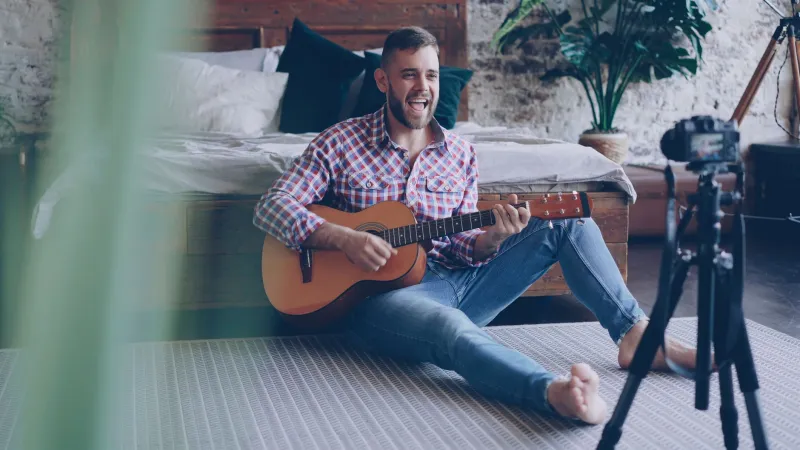
The result: songs can go from a bedroom recording to 100 million streams before a label executive even books a listening session.
The New Tastemakers Aren't Who You Think
Forget the radio programmer in a suit. The new A&R department is a 19-year-old in Phoenix making a get-ready-with-me video. It's a creator in Houston who uses a specific audio clip for a dance transition and suddenly that clip is inescapable. It's the comment section collectively deciding that a song "goes so hard" and then making it go harder by sheer repetition.
Artists who've lived this firsthand will tell you it's both exhilarating and disorienting. Kalani Pe'a, an emerging R&B singer based in Los Angeles, described posting a snippet of an unfinished track last year just to get feedback. "I literally had the bridge half-written," she said. "By the time I woke up the next morning, the sound had been used in like 8,000 videos. I had to finish the song because of TikTok. The internet basically told me the song existed before I knew it did."
That's not a rare story anymore. It's practically the template.
The Blessing Nobody Warned You About
Going viral on TikTok sounds like a dream, and in some ways it absolutely is. Independent artists who would have spent years grinding for a label's attention can now build an audience of millions without a single industry co-sign. The democratization is real. The opportunity is real.
But the blessing comes with some serious asterisks.
First, TikTok virality is notoriously fickle. A sound can peak and crash within two weeks. Artists who blow up on the platform sometimes find that the attention is attached to one specific moment — one hook, one meme format — and doesn't necessarily translate into sustained streaming numbers, ticket sales, or long-term fanbases. The internet moved on. The artist is left holding a viral moment that already feels like ancient history.
Second, there's a very specific kind of creative pressure that comes with TikTok success. Once an artist figures out what "works" on the app, the temptation — or sometimes the outright expectation from new followers — is to keep making that same thing. Songs get written to be TikTok sounds rather than complete artistic statements. Hooks get front-loaded. Drops get engineered for the 15-second clip. The tail starts wagging the dog.
Producer Marcus Delray, who's worked with several artists navigating post-viral transitions, put it bluntly: "The platform trains you. You start writing for the format without even realizing it. And then you put out a full project and people are like, 'where's the TikTok part?' That's a weird place to be as an artist."
Labels Adapt (Sort Of)
The major labels aren't oblivious to any of this. They've adjusted — hiring TikTok-specific marketing teams, signing artists specifically because of their platform presence, and in some cases, engineering "organic" virality by seeding sounds with influencer networks.
That last part is where things get murky. The line between a genuine grassroots moment and a manufactured campaign disguised as one is increasingly blurry. When a sound suddenly appears across 200 creator accounts in the same 48-hour window, it's worth asking who's behind the curtain. Listeners don't always know. Sometimes the creators don't fully know either.
What this means is that TikTok's power as a democratic discovery engine is real — but it's also being gamed, just like every other platform before it.
Radio? Gen Z Says Respectfully, No Thanks
While all of this is happening, traditional radio is watching its cultural relevance evaporate in real time. Among Gen Z listeners, radio ranks embarrassingly low as a music discovery method. Spotify, TikTok, YouTube, and word-of-mouth (which now mostly means group chats and shared playlists) have completely replaced the drive-time DJ as a cultural authority.
This isn't just a vibe shift. It has structural consequences. Radio play was once a prerequisite for mainstream success — it drove sales, boosted chart positions, and gave labels a measurable return on promotion spend. Now, a song can top streaming charts without ever getting significant radio rotation. The metrics that matter have fundamentally changed.
For older industry players, this is genuinely disorienting. For emerging artists and their fans? It's just Tuesday.
Where the Beat Goes From Here
TikTok's dominance isn't permanent — nothing in the attention economy is. But the shift it represents almost certainly is. The idea that a song needs institutional validation before it can reach an audience is essentially dead. The idea that discovery flows from the top down — from label to radio to listener — is on life support.
What's replacing it is messier, faster, more democratic, and more chaotic all at once. Artists are building careers on platforms that can change their algorithm overnight. Labels are signing trends as much as they're signing talent. And listeners are discovering music through a 15-second clip someone made in their kitchen at midnight.
Honestly? The beat has never been harder to predict. And that might be the most exciting thing about where music is right now.