No Deal, No Problem: The Independent Artists Betting on Themselves and Winning in 2024
There's a particular fantasy that's lived rent-free in the music industry's collective imagination for decades: the discovery story. A scout catches a set at some dive bar in Nashville or a bedroom recording goes viral, and suddenly there's a label executive on the phone with a life-changing number. Sign here. Welcome to the machine.
But something strange is happening in 2024. More and more artists are hearing that number — and hanging up.
The Deal That Wasn't Worth It
To understand why musicians are walking away from major label offers, you have to understand what those deals actually look like under the hood. The advance — that glamorous lump sum that sounds like winning the lottery — is a loan. It gets recouped from your royalties before you see a cent. The label often owns your masters, controls your release schedule, has approval over your creative direction, and takes the lion's share of revenue from streams, sync deals, and sometimes even touring.
For decades, artists accepted these terms because there was no other realistic path to scale. Radio play, physical distribution, MTV — all of it required institutional infrastructure that only labels could provide.
That infrastructure argument has been quietly crumbling for years. In 2024, it's basically rubble.
"I got an offer that would have looked incredible on paper to my 19-year-old self," says Marcus Ellery, a 26-year-old bedroom pop artist based in Portland who's been releasing music independently since 2020. "But when I actually broke down what I'd be giving up — creative control, my masters, my timeline — I realized I'd essentially be taking out a very expensive loan to fund someone else's vision of my career."
Ellery turned it down. He now supports himself entirely through Bandcamp sales, a Patreon with just over 4,000 subscribers, and a touring circuit that keeps him profitable without requiring him to play arenas.
The Bedroom Pop Economy
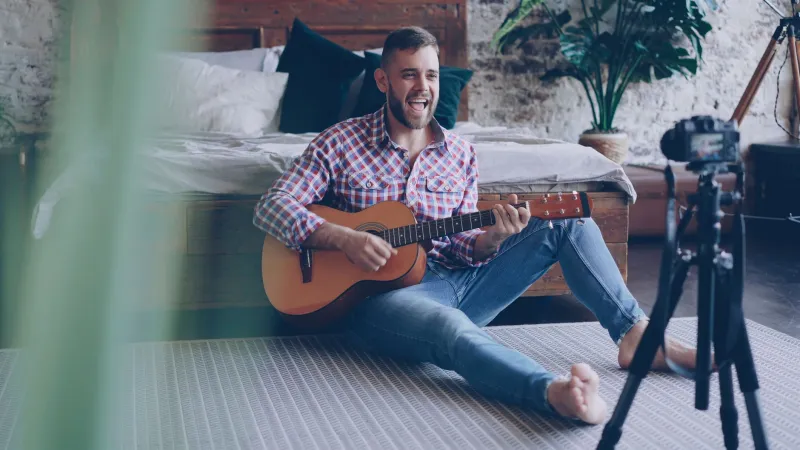
The genre name itself is almost a manifesto. Bedroom pop — lo-fi, intimate, recorded in apartments and spare rooms with modest equipment — didn't just produce a sound. It produced a business model.
When artists like Clairo, Rex Orange County, and Phoebe Bridgers demonstrated that you could build massive audiences from homemade recordings, they didn't just inspire a sonic aesthetic. They proved that the distance between a bedroom and a devoted fanbase could be measured in WiFi signal, not label contracts.
The economics have shifted dramatically. Spotify's royalty rates remain a genuine point of contention — fractions of a cent per stream isn't anyone's idea of a windfall — but the platform is only one piece of a much larger puzzle. Artists who own their masters can license music for TV, film, and advertising directly. Merchandise, sold through platforms like Shopify or Printful, generates margins that streaming will never touch. Live shows, even at the 200-300 capacity level, can be genuinely lucrative when you're not splitting revenue with a label.
And then there's direct fan support. Patreon, Substack, even Ko-fi have created entirely new revenue streams that didn't exist fifteen years ago. Fans who feel a genuine connection to an artist will pay monthly for early access, behind-the-scenes content, and the simple feeling of being part of something smaller and more intimate than a stadium tour.
"My Patreon pays my rent," says Dani Reyes, a singer-songwriter from Austin who blends indie folk with elements of cumbia. "Like, literally. I have 2,200 patrons paying $5 a month. That's $11,000 a month before I've played a single show or sold a single record. No label can offer me that kind of baseline security without taking something enormous in return."
When the Label Comes Calling: Pressure, Flattery, and FOMO
Rejecting a label offer isn't always as clean as it sounds. The music industry is exceptionally good at making artists feel like they're making a catastrophic mistake by saying no. There's social pressure — the idea that a "real" artist eventually gets signed, that independent success is somehow a consolation prize. There's the fear of missing out on promotional budgets, playlist placements, and the kind of visibility that labels can still, in some contexts, provide.
And sometimes the offers are genuinely tempting. Not every label deal is a trap. Some artists — particularly those targeting mainstream pop or hip-hop markets where radio and major playlist placement still carry enormous weight — may genuinely benefit from label infrastructure.
But for a growing cohort of artists, especially those operating in indie, folk, experimental, and niche-genre spaces, the calculus has changed. The question is no longer "can I survive without a label?" It's "what exactly does a label offer me that I can't build myself?"
For many, the honest answer is: not enough to justify the cost.
The Streaming Platform Question
It would be incomplete to paint this picture without acknowledging the genuine frustrations with streaming economics. Spotify's per-stream rates — hovering around $0.003 to $0.005 — mean that an independent artist needs millions of streams just to generate meaningful income from the platform alone. That's a real structural problem, and it disproportionately affects independent artists who lack the promotional muscle to hit those numbers consistently.
But the artists who are thriving independently in 2024 largely aren't relying on streaming as their primary revenue source. They're treating Spotify and Apple Music the way a smart retailer treats a loss leader — a discovery mechanism, a place where new listeners find them, and a gateway to more profitable relationships.
The artists who use streaming as their entire business model are the ones struggling. The artists who treat it as one layer of a diversified ecosystem are finding real sustainability.
The Future Sounds Like a Bedroom
Something genuinely exciting is happening at the margins of American music right now. Without the pressure to produce radio-friendly singles on a label's timeline, independent artists are taking creative risks that major label A&R would likely kill in committee. Weird genre fusions, unconventional song structures, albums that unfold as genuine artistic statements rather than collections of potential singles — this stuff is flourishing.
And audiences are finding it. Not always in massive numbers, but in deeply loyal ones. A thousand true fans — the old Kevin Kelly concept — isn't just a theory anymore. It's a business plan that's working for real people.
The major labels aren't going anywhere. They still have the resources and the infrastructure to manufacture pop moments at a scale that no independent artist can replicate. But their monopoly on viability — on the idea that they represent the only legitimate path to a sustainable music career — is genuinely over.
For the artists betting on themselves in 2024, that's not a consolation. That's the whole point.
The beat drops whether or not there's a label logo on the sleeve. And right now, some of the most interesting drops are happening in bedrooms, basements, and home studios where the only executive in the room is the artist themselves.