Solo Is a Dirty Word Now: How the Feature Game Took Over the Music Industry
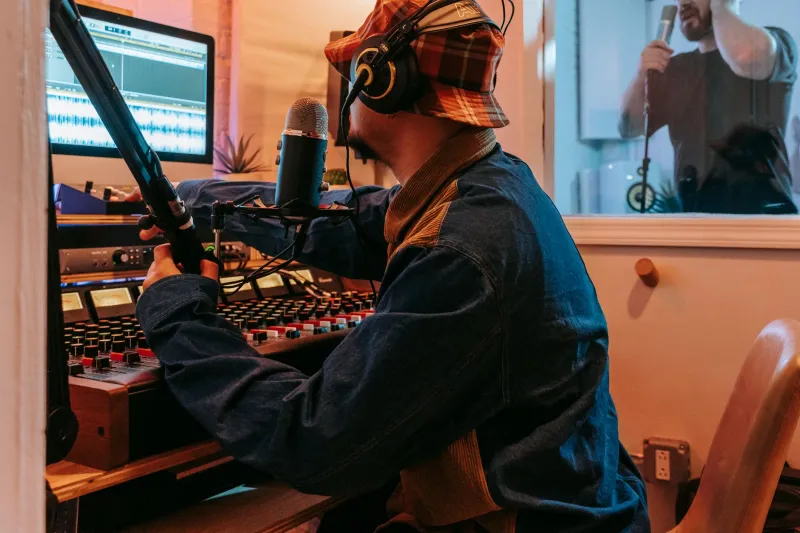
Remember when a guest verse felt like a gift? Like stumbling onto a bonus track you weren't expecting, or watching two of your favorites share a stage for no reason other than they genuinely wanted to? That energy — spontaneous, electric, a little rare — is getting harder to find. These days, the feature isn't a surprise. It's a strategy.
And in 2024, strategy is everything.
From Creative Bonus to Career Necessity
There was a time when collabs carried weight precisely because they didn't happen constantly. Think about the cultural moment when Jay-Z and Kanye dropped Watch the Throne, or when Kendrick showed up on a track and the internet lost its mind for 48 hours. Features meant something because they were exceptions.
Now scroll through any emerging artist's recent discography and count how many tracks they've released entirely on their own. The number might surprise you — and not in a good way.
The shift didn't happen overnight. Streaming platforms, algorithm-driven playlists, and the social media attention economy slowly rewired the logic of how music gets discovered. A feature means two fan bases. Two fan bases mean double the first-day streams. Double the streams mean better algorithmic placement. Better placement means more listeners. The math isn't subtle.
"I had a project I was ready to drop — all me, all my voice," says Darius, a 24-year-old R&B artist based in Atlanta who asked to use only his first name. "My manager basically told me to hold it. Said I needed at least two features before we could even talk about a release date. Not because the music wasn't good. Because the numbers wouldn't move without names attached."
That's the new reality. Artistic readiness is secondary to feature inventory.
The Economics of the Guest Verse
Here's what nobody puts in the press release: features cost money. Sometimes a lot of it.
For mid-tier artists trying to climb, a guest verse from someone with a bigger platform can run anywhere from a few thousand dollars to well into five figures, depending on who you're talking to and how hot their moment is. There's a whole informal economy built around this — managers negotiating rates, producers bundling features into production deals, publicists timing drops around a featured artist's press cycle.
And that's before you factor in the creative compromises. When you're paying for a verse, you don't always get to direct the energy. You get what the featured artist decides to give you, which may or may not actually serve your song.
"I've heard tracks where the feature clearly phoned it in," says Marcus Webb, an independent music producer who's worked with artists across hip-hop and pop. "The host artist sounds incredible, they're pouring everything into it, and then the feature comes in with something generic. But the label still pushed it because the name was there. The name was the whole point."
The result is a weird paradox: the feature is supposed to elevate the song, but increasingly, the song exists to justify the feature.
The Algorithmic Pressure Nobody's Talking About Loudly Enough
Spotify, Apple Music, and TikTok all have their own internal logic when it comes to surfacing new music — and while none of them publish a rulebook, the patterns are visible enough that the industry has reverse-engineered a rough playbook.
Collaborations tend to generate more saves, more adds to user playlists, and more cross-demographic reach than solo tracks from the same artist. That cross-demographic reach is the golden ticket. It signals to the algorithm that a track has broad appeal, which feeds into editorial playlist consideration, which feeds into visibility, which feeds into everything else.
Streaming analysts have been tracking this shift for years. "The feature isn't just a cultural thing anymore — it's a data thing," explains one analyst who works with an independent label and spoke on background. "Artists who release solo projects without any collaborative moments are essentially starting with one hand tied behind their back, at least from a discovery standpoint."
Which means the pressure to collab isn't just coming from managers and labels. It's baked into the infrastructure of how music gets heard.
When Networking Becomes the Art
There's a generation of artists coming up right now who've essentially been trained to think of their career in terms of relationship capital. Who do you know? Who owes you a verse? Who can you get in the studio with before their next album cycle?
In some ways, this isn't totally new — the music industry has always run on relationships. But there's something different about the current climate. The networking has become so central that it can start to crowd out the actual creative work.
"I've been in rooms where artists are talking more about who they're going to get on their next single than what the single is going to say," Darius admits. "Like, the concept comes after the feature. That's backwards."
This is where the collab industrial complex gets genuinely concerning. If the feature is the strategy and the song is the vehicle, you end up with a lot of music that's technically impressive on paper — great names, clean production, solid rollout — but emotionally hollow. It checks every box except the one that matters most: did it make you feel something?
Can You Still Go Solo?
Some artists are pushing back. There's a quiet but real countermovement of musicians — mostly independent, mostly unbothered by traditional industry metrics — who are dropping full projects with zero features and daring the algorithm to ignore them.
Some are losing that dare. Others are winning in ways that don't show up on streaming dashboards: deeper fan loyalty, more authentic community, creative work that actually reflects who they are.
"Going solo is a risk," Webb acknowledges. "But it's also the only way to know if your music can stand on its own. And I think audiences can tell the difference. They know when a feature is there because it belongs there versus when it's just furniture."
The artists who figure out how to work within the feature economy without being consumed by it — who collab when it genuinely serves the music and hold their ground when it doesn't — those are the ones worth watching.
Because at some point, the beat has to drop for you. Not for the algorithm. Not for the feature request in your DMs. For you.
And that's still worth something, even if the playlist doesn't always agree.