Your Private Listening History Is Snitching on You Right Now
Let's get uncomfortable for a second.
You've got a meticulously organized playlist called something like "Sunday Slow Mornings" or "Indie Vibes Only" that you'd absolutely share with a new date. It's got the right names on it. Phoebe Bridgers. Frank Ocean. Maybe a little Khruangbin to show range. You built that thing like a résumé.
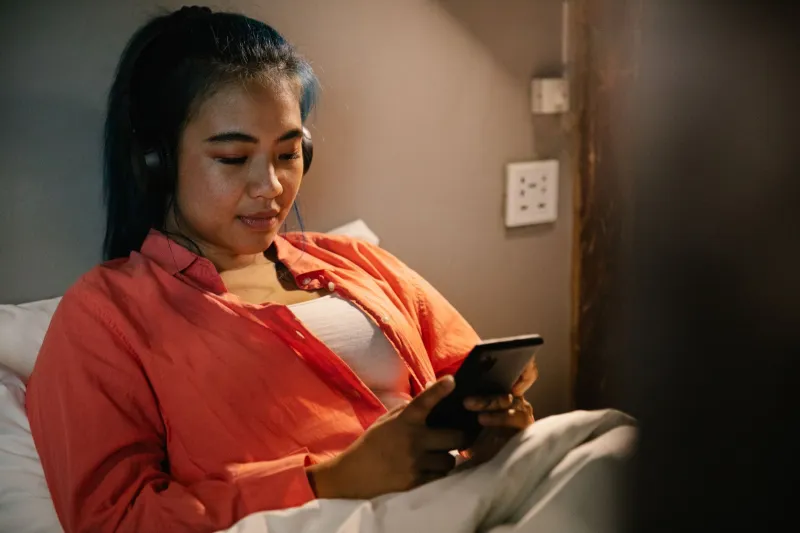
And then there's the other stuff. The playlist with no name, or maybe just a string of emojis. The one you'd sooner delete than screenshot. The one that has four different versions of the same mid-2000s pop banger and a suspicious number of songs from that one reality TV show soundtrack.
Here's the thing: the algorithm already knows. And it's been using that information against you — or rather, in very calculated ways that the music industry is only now starting to fully exploit.
The Double Life We're All Living
Streaming platforms have always collected data. But the sophistication of what they're actually tracking has crossed into something that feels almost uncomfortably personal. It's not just what you play. It's how long you play it before skipping. Whether you replay a song immediately or let it sit. Whether you only listen during commute hours or exclusively at 1 AM. Whether you added something to a playlist and then never actually listened to it.
That last one is the real kicker. Saving a song is a public-facing act. Actually playing it is private truth. And platforms know the difference.
Music researchers have a term for the gap between our stated preferences and our actual behavior: the social desirability bias. Basically, people consistently overreport listening to genres they consider prestigious — classical, jazz, "conscious" hip-hop — and underreport the music they find emotionally satisfying but culturally embarrassing. We've been doing this forever on surveys. Now we're doing it with our save buttons, and the algorithm is taking notes.
Labels Are Hunting Your Guilty Pleasures
Here's where it gets genuinely interesting, and maybe a little unsettling.
Record labels and their analytics teams have gotten very good at identifying what the industry quietly calls "private play" demographics. These are listener segments whose public-facing behavior — the playlists they follow, the artists they share on their Stories — diverges significantly from their actual consumption patterns. And those listeners, it turns out, are incredibly valuable.
Why? Because they're underserved. If a huge chunk of people are secretly replaying a certain type of song but publicly pretending they're not into it, that's a market gap. That's an opportunity to drop something that scratches exactly that itch without anyone having to admit they were itching.
This is part of why you keep seeing major label artists release what feel like random stylistic detours — a country-leaning track from a rap artist, a pop-adjacent project from someone who built their whole brand on being "alternative." It's not always artistic evolution. Sometimes it's a data-informed gamble on a closeted fanbase that the numbers say definitely exists.
The Playlist as a Performance
Social music culture has made this worse in the most fascinating way. When Spotify made sharing playlists frictionless, and when platforms started surfacing what your friends were listening to, the curated playlist became a personality statement. People spend real time on their public-facing queues. There are aesthetic considerations. Sequencing decisions. An awareness that what you listen to says something about who you are.
And honestly? That's not entirely fake. Taste is real. The music you genuinely love does reflect something true about you.
But the performance layer is thick. When every streaming platform is a potential social mirror, the music you save publicly and the music you actually play in private start to drift apart. The saved playlist becomes a mood board. The repeat queue becomes a confession booth.
What's wild is that artists are starting to build for both audiences simultaneously. There's the single that's designed to be the one you add to your public "good music" list, and then there's the deep cut — sometimes buried in the middle of a project — that's engineered specifically to catch you in a vulnerable moment and never let go. The kind of song you don't share, you just play at 2 AM when nobody's watching.
The Authenticity Paradox
Here's the philosophical knot at the center of all this: the music you're embarrassed about might actually be the music that means the most to you.
There's a reason those songs hit different in private. It's not just that they're "guilty pleasures" in the dismissive sense. It's that you're listening to them without the social filter on. You're not performing enjoyment. You're just feeling it. And that unguarded listening experience is often more emotionally honest than anything you'd put on a curated playlist for public consumption.
The algorithm doesn't care about the performance. It just sees the play count. And in that sense, your listening history might be the most accurate document of your actual emotional life that exists on the internet right now.
Which is either beautiful or terrifying, depending on how many times you've replayed that one embarrassing song this week.
The beat drops whether you admit you're listening or not. The data's already there. And somewhere in a label's analytics dashboard, someone is looking at your private rotation and building the next project specifically for you — the real you, not the playlist version.
You might want to make peace with that.