Your Taste in Music Is Being Judged Right Now — And You Already Know It
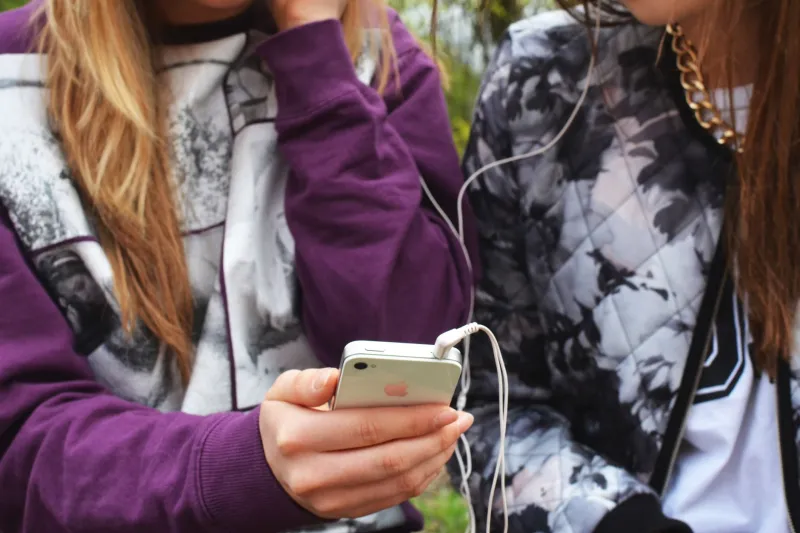
Here's a scenario you've probably lived: You're in the car with someone new — a date, a new coworker, a friend-of-a-friend you're still figuring out — and they hand you the aux cord. Suddenly it's not just about picking a song. It's about picking yourself. The wrong move and you're explaining your way out of a Nickelback deep cut for the rest of the drive. The right one and you're basically best friends by the next traffic light.
We've all been there. And if you think that pressure disappears once the cord gets handed back, think again. Music taste has evolved into one of the most loaded social currencies in modern life — a quiet, constant personality test that your friends, partners, and even strangers on Spotify are grading you on in real time.
The Playlist as a Portrait
There's a reason people agonize over their public Spotify profiles the way they do over their Instagram grids. A playlist isn't just a collection of songs — it's a curated self-portrait. Every track is a choice, and every choice is a signal.
Dr. Arash Javanbakht, a psychiatrist and neuroscientist at Wayne State University who studies emotion and social behavior, puts it plainly: "Music activates deep emotional centers in the brain. When we share our taste, we're essentially sharing our emotional world. And we know, consciously or not, that other people are reading it."
That reading happens fast. Research in social psychology consistently shows that people make sweeping personality inferences from music preferences within seconds — openness, intelligence, emotional depth, even political leanings. It's not fair, but it's real. And in a culture where dating apps let you pin your Spotify to your profile and friends can follow your listening activity in real time, the audition never really ends.
The Silent Scroll Through Someone's Liked Songs
Ask anyone who's ever snooped through a partner's liked songs — or had their own scrolled through — and they'll tell you it feels strangely intimate. More than texts, sometimes. More revealing than a social media feed.
"I went through my ex's Spotify when we first started dating," says Janelle, 27, a marketing coordinator in Atlanta. "He had, like, forty consecutive sad boy indie songs and I thought, okay, this man has layers. I was into it. Then six months later when he was emotionally unavailable, I was like — the playlist told me."
That's the thing about music taste as a social signal: people believe it's honest in a way that other self-presentation isn't. You can craft a perfect Instagram. You can rehearse your Hinge bio. But your liked songs? Those accumulate in real time, unfiltered, song by song. They feel like receipts.
Relationship therapist and author Dr. Megan Fleming, based in New York, says this tracks with how intimacy actually works. "Sharing what moves you emotionally — and music is deeply emotional — creates vulnerability. When someone lets you into their playlist, there's an implicit trust there. And when that's violated, or judged harshly, it stings in a specific way."
The Performative Playlist Problem
Of course, the flip side of all this is that some people know exactly what the game is — and they're playing it hard.
Enter the Performative Playlist. You know the type. The guy who only has jazz and Brazilian bossa nova in his public queue but you know he's privately streaming post-Malone. The person whose "gym playlist" is suspiciously full of critically acclaimed underground rap that they definitely researched before adding. The friend who updates their "what I'm feeling rn" playlist right after a breakup with tracks that are a little too perfectly on-brand for the emotional moment.
We're not just listening to music anymore. We're deploying it.
"There's a term in sociology called impression management," says Dr. Javanbakht. "We're always, to some degree, curating how others see us. Music is just one of the newest, most granular arenas where that plays out."
And social platforms have turbocharged it. Spotify's collaborative playlists, the ability to share listening activity, the "blend" feature that merges two people's tastes — all of it creates more opportunities for music to function as social performance. You're not just listening; you're broadcasting.
When the Judgment Cuts Deep
None of this would matter much if the stakes were low. But for a lot of people, music taste judgment hits somewhere real.
Marcos, 31, a teacher in Chicago, remembers the moment a first date glanced at his phone screen mid-song and made a face. "She saw I was playing regional Mexican music and just — her expression shifted. She didn't say anything, but I felt it. And I felt embarrassed, which then made me angry at myself for feeling embarrassed about something I actually love."
That kind of moment sits at the intersection of taste, identity, and belonging. Music preference is often tied to cultural background, family history, regional identity. When someone signals that your taste is lesser-than, they're not just critiquing a playlist. They're critiquing you.
Dr. Fleming sees this in her practice more than people might expect. "Clients bring up music compatibility in relationships more than you'd think. It's rarely just about the songs. It's about feeling seen, feeling like your emotional world is respected."
So What Does Your Playlist Actually Say About You?
Here's the uncomfortable truth: probably more than you want it to, and less than other people think it does.
Studies on music and personality — including well-known research from psychologist Jason Rentfrow at the University of Cambridge — suggest that broad genre preferences do correlate with certain personality traits. Fans of complex, intense music (think jazz, classical, heavy metal) tend to score higher in openness and creativity. Pop fans often rank higher in extraversion and agreeableness. But these are tendencies across large groups, not personality verdicts for individuals.
The problem is that we treat them like verdicts anyway.
"We're pattern-matching machines," says Dr. Javanbakht. "When we see someone's music taste, our brain immediately tries to fit them into a category. It's efficient, but it's also often wrong."
The Aux Cord as Intimacy
For all the social anxiety wrapped up in this, there's something kind of beautiful buried in it too. The fact that we care so much about music compatibility — that we feel exposed when someone scrolls our liked songs, that we get giddy when a date's playlist overlaps with ours — says something about how much music still matters.
In a world where connection increasingly happens through screens and algorithms, music remains one of the most human ways we signal: this is who I am, this is what I feel, do you get it?
The playlist isn't just a personality test. It's an invitation.
So yeah, hand over the aux cord. Just maybe give the Nickelback a few more scrolls down before you land on it.