One Word, Whole Personality: How 'Demure' Became the Aesthetic Label Everyone Was Waiting For
Somewhere between your morning coffee and your third scroll session of the day, you probably ran into it. A video. A caption. A comment section full of people nodding along like they'd finally found their people. The word? Demure. And somehow, just like that, an adjective your grandmother used to describe a well-behaved dinner guest became the defining personality update of the season.
This is the internet, so of course it happened fast. But the speed isn't the interesting part — it's the stickiness. Because unlike a lot of TikTok trends that evaporate before you can even share them with your group chat, the demure aesthetic has lodged itself into the culture with a grip that feels genuinely different. People aren't just using the word. They're restructuring their entire vibe around it.
So What Even Is 'Demure'?
Let's get the obvious out of the way: demure, in the traditional dictionary sense, means modest, reserved, quiet. Think soft-spoken, understated, not-the-loudest-person-in-the-room energy. But the TikTok version? It's messier, more layered, and honestly a lot more interesting than that.
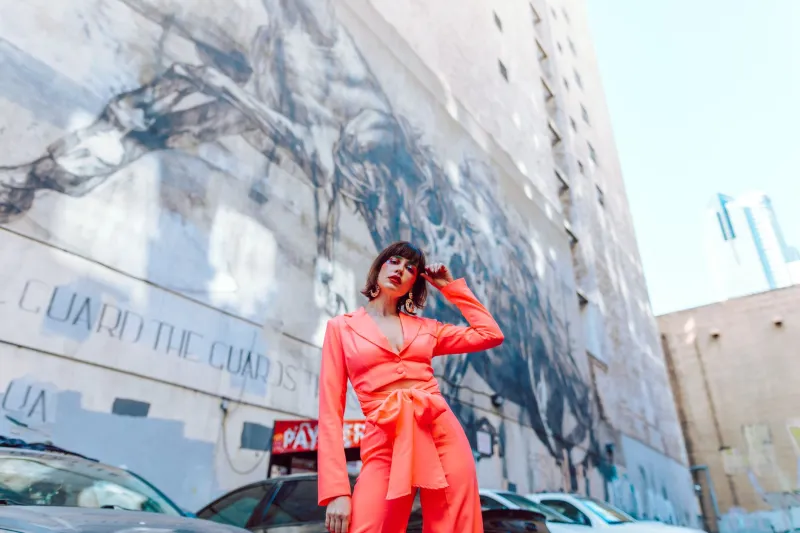
In its current cultural incarnation, being demure is less about being small and more about being intentional. It's choosing the silk slip dress over the bandage skirt. It's not oversharing on a first date. It's ordering the sparkling water and meaning it. Creators who've leaned into the label describe it as a kind of quiet confidence — the idea that you don't need to be the main character in every room because you already know what you're worth.
"People keep saying demure means boring or plain, and that's just not it," says one lifestyle creator with a following in the hundreds of thousands who's built a whole corner of her content around the aesthetic. "It's more like... you're not performing for anyone. You're just being yourself, and that self happens to be put-together and calm. That's powerful."
That reframing — from modesty as limitation to modesty as power move — is exactly why the label caught fire the way it did.
The Psychology of the Aesthetic Label
Here's the thing about humans: we love a box. Not because we're shallow, but because identity is genuinely hard to communicate, and a single evocative word does a lot of heavy lifting. When someone says they're "that girl," or "coastal grandmother," or "dark academia," they're not just describing an outfit — they're sending a whole signal about their values, their aspirations, and the kind of community they want to belong to.
Psychologists call this kind of shorthand social signaling, and it's been happening forever. What's new is the speed and scale at which the internet can generate, distribute, and eventually exhaust these labels. TikTok's algorithm is basically a label-manufacturing machine: it finds content that resonates, clusters it into a visual language, and then hands that language to millions of people who are actively searching for a way to describe themselves.
"We're in this era where people are really hungry to define who they are post-pandemic," says one cultural commentator who covers Gen Z identity trends. "The aesthetic label fills a gap. It gives you instant community, instant recognition, and a way to curate how the world sees you without having to write a whole essay about it."
For Gen Z especially — a generation that grew up being told they were unique but also grew up desperately online — the paradox of choosing a collective aesthetic as a form of self-expression makes complete sense. It's not conformity. It's curation.
Where It Started (And How It Got Here)
Trace the current wave of demure content back far enough and you'll find Jools Lebron, the TikTok creator who went massively viral for her deadpan videos about being "very demure, very mindful" at work. Her delivery was dry, her observations were sharp, and the whole thing felt like a joke that was also completely serious — which is the exact frequency Gen Z communicates on.
But here's what's interesting: the trend didn't stay ironic for long. The original content had a satirical edge, poking fun at workplace culture and the performance of professionalism. By the time it reached the wider internet, though, people had stripped away some of the irony and turned it into a genuine aesthetic manifesto. That gap — between what a creator means and what the audience runs with — is where most viral aesthetics actually live.
Fashion brands noticed. Searches for quiet luxury pieces, minimalist accessories, and "modest" styling spiked across Pinterest and major retail sites. Some brands leaned in explicitly, using demure-adjacent language in their marketing. Others just quietly restocked their silk blouses and let the algorithm do the work.
The Backlash Was Inevitable (And Also Kind of Missing the Point)
Of course, not everyone is on board. The counterargument goes something like this: "demure" is just another way to police women's behavior, repackage compliance as empowerment, and make people feel like being loud, messy, or maximalist is somehow less evolved. It's a fair critique, and it's one that creators within the community have actually been wrestling with publicly.
"I don't think being demure means being a pushover," one creator argued in a response video that racked up millions of views. "I'm demure and I'll tell you exactly what I think. Those things coexist."
That tension — between the aesthetic as genuine self-expression and the aesthetic as a new form of social pressure — is what makes it culturally rich rather than just a passing moment. The best trends don't just tell you what to wear. They make you think about why you want to wear it.
What Comes Next
If history is any guide, the word itself will eventually become overexposed. Some new label will emerge, probably from a single video, probably from someone who wasn't trying to start a movement. And the cycle will begin again.
But the underlying impulse — the desire to find a word that captures something true about who you're trying to be — that's not going anywhere. We've always needed language to build community around. TikTok just made the turnaround time a lot shorter.
For now, though? The demure era is very much still in session. And honestly, there are worse ways to move through the world than with a little intention, a little restraint, and a whole lot of quiet confidence.
Very mindful of it, really.