Great Album, Zero Noise: The Quiet Disappearing Act That's Haunting Music in 2024
The Paradox Nobody Wants to Admit
Let's say you make something genuinely great. Not "great" in the way press releases use the word, but actually, uncommonly good — the kind of album that rewards repeat listens, that reveals new things on the fourth play, that sounds like nothing else dropping this quarter. You put it out. You wait.
And then: nothing. A few thousand streams in the first week. Some kind words from critics who write for outlets with modest readerships. A playlist placement that generates a brief, unrepeatable spike. And then the algorithm moves on, and so does everyone else, and your album settles into the streaming catalog like a message in a bottle that nobody found.
Meanwhile, across town, someone drops a project that's built around one gimmick, has three genuinely good songs, and was seeded to forty influencers three weeks before release. It's everywhere. It's on the meme pages. It's soundtracking TikTok auditions. It's being debated on podcasts by people who clearly haven't listened to the full thing. It wins the moment completely.
This is the invisible album problem, and it is quietly reshaping what kind of music gets made, what kind of artists get signed, and what the culture actually hears.
The Marketing Gap Is Wider Than the Talent Gap
The music industry has always had a marketing problem — good music has always been capable of getting buried under louder, better-funded competition. But what's different now is the specific mechanism of burial. It's not just about who has the bigger budget. It's about who understands the algorithmic ecosystem well enough to game it at exactly the right moment.
Streaming platforms surface music based on engagement signals: saves, shares, playlist adds, skip rates, completion rates. In the first 48 to 72 hours after release, an album either generates enough of those signals to get picked up by editorial playlists and algorithmic recommendations, or it doesn't. If it doesn't, the window closes fast. The platform essentially decides your music isn't connecting and stops showing it to new people.
For artists with major label infrastructure, that initial signal can be manufactured. Pre-save campaigns, influencer seeding, coordinated playlist pitching, radio promotion — all of it exists to flood the zone in that critical early window and convince the algorithm that the project has momentum. For independent artists, or artists on smaller labels without that playbook, the window opens and closes before they even know it was there.
Talent is not a factor in any of that calculation. The algorithm does not know the difference between a masterpiece and a mediocre project that was marketed correctly. It only knows engagement.
The Influencer Seeding Problem
One of the most significant developments in music marketing over the past three years is the professionalization of influencer seeding — the practice of getting a project into the hands of content creators before it drops so that reaction content, aesthetic posts, and viral moments are already in motion on release day.
Done well, this is genuinely effective. It creates the impression of cultural momentum before the music has had a chance to prove it organically. Done cynically — and it is very often done cynically — it produces a kind of artificial consensus, where a project appears to be everywhere not because people are connecting with it but because a marketing team paid to make it appear that way.
The problem for genuinely great music is that it often doesn't lend itself to easy influencer content. Complex, layered, emotionally challenging albums don't make great fifteen-second clips. They don't generate shareable moments. They require the kind of sustained attention that content creation culture actively discourages. So they get passed over in the seeding process, not because they're worse, but because they're harder to package.
The albums that break the internet tend to be the ones that are about breaking the internet — designed from the ground up to generate moments rather than experiences. Which is a very different artistic intention, and it shows in the music.
Cultural Timing and the Luck Problem
Even when an artist does everything right — great music, solid marketing, good influencer relationships — there's still the matter of timing. Dropping an album the same week as a cultural supernova is a strategy that ends careers. The discourse only has so much bandwidth, and when it's consumed by a dominant release, everything else gets compressed into footnotes.
What's particularly cruel about the timing problem is how random it can be. An artist might have spent two years on an album, picked a release date that looked clean six months out, and then watched a competing drop get moved to the same Friday with two weeks' notice. The label machine can absorb that kind of disruption. The independent artist usually cannot.
There's also the question of cultural temperature — whether the moment an album arrives in matches the emotional register of the music. An album about grief and slowness that drops during a summer when the cultural mood is pure escapism is going to struggle regardless of its quality. Music doesn't exist in a vacuum, and neither does the audience's capacity to receive it.
What Gets Lost When Good Albums Disappear
The invisible album problem isn't just a business issue. It's a cultural one. When the discovery infrastructure consistently surfaces the loudest and most aggressively marketed music over the most artistically significant, it shapes what artists decide to make next.
If you've watched a genuinely ambitious project vanish while a calculated one dominated, the lesson the industry teaches you is clear: ambition doesn't pay. Calculation does. And over time, that lesson changes the music that gets made, because artists — especially independent ones who are paying rent with their streaming revenue — are rational people who respond to incentives.
The listeners who care most about music — the ones who dig into catalogs, who follow artists across stylistic shifts, who treat albums as complete works rather than track bundles — are the ones who lose the most in this environment. Their taste doesn't scale. It doesn't generate the kind of rapid engagement that algorithms reward. So the system doesn't optimize for them.
Finding the Albums That Didn't Make It
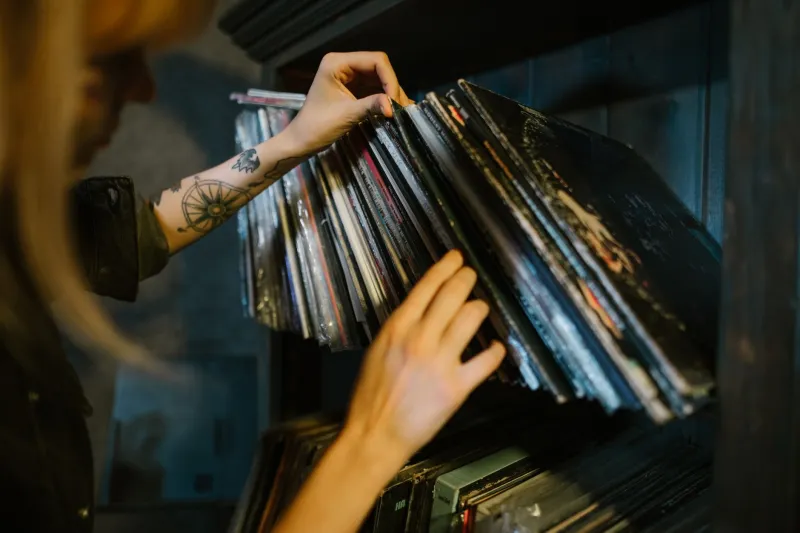
Here's the thing though: the music is still there. Every year, buried three pages deep in streaming catalogs and sitting in the libraries of the listeners who found it early, there are albums that deserved more than they got. They didn't break the internet. They didn't generate think pieces or meme templates. They just quietly did what great music does — they said something real, in a way that only that particular artist could say it.
Finding those albums is harder than it used to be. But that's exactly why it matters more. In a culture that optimizes relentlessly for noise, the quiet ones are worth the effort.