Can't Hear a Word and That's Exactly the Point: The Rise of the Intentional Mumble

Photo by Photo by Tony Chen on Unsplash on Unsplash
You've been there. You're three songs deep into a new playlist, and something comes on that you genuinely cannot parse. The vocals are buried, the syllables are slipping into each other, and you're not sure if the artist is whispering a confession or just running words through a blender. And somehow — somehow — you're completely hooked.
This is not an accident. The mumble is a choice. And in 2024, it might be the most interesting choice a vocalist can make.
From Atlanta to Everywhere: A Brief History of the Deliberate Slur
The roots of this aren't exactly hidden. Trap music spent the better part of a decade proving that diction is optional when the vibe is right. Artists like Future and Young Thug built entire sonic identities on the idea that the feeling of a word matters more than its legibility — that melody and texture can carry meaning even when the lyrics themselves are technically underwater.
That was a regional innovation that went national, then global. But what's happening now is something slightly different. The mumble has migrated. It's showing up in indie-pop bedrooms, in alternative R&B sessions, in lo-fi singer-songwriter spaces that you'd never expect to borrow from Atlanta's trap playbook. The aesthetic has been abstracted from its origins and turned into something that crosses genre lines entirely.
The through line isn't geography or genre — it's intention. These artists aren't mumbling because they ran out of time in the vocal booth. They're mumbling at you.
Polish Is a Red Flag Now
There's a generational thing happening here that's worth naming. For a significant chunk of younger listeners — the ones who grew up with SoundCloud drops and bedroom-recorded Spotify singles — hyper-polished production is associated with a specific kind of corporate inauthenticity. The too-clean vocal, the pitch-corrected to within an inch of its life, the mix that sounds like it was assembled in a lab — that stuff reads as manufactured. It reads as try-hard in the wrong direction.
Roughness, on the other hand, reads as trust. If an artist is willing to let you hear the imperfection — the breath, the slur, the word that technically didn't land — that feels like access. Like you're getting something real instead of something packaged.
The mumble is intimacy encoded as audio. It's the vocal equivalent of a low-quality photo that looks more honest than a professional headshot.
What Producers Are Actually Doing
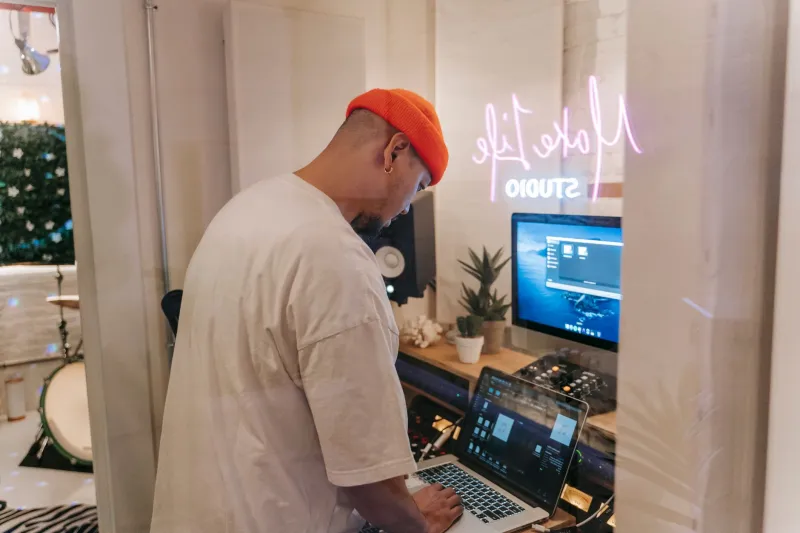
On the technical side, this trend has pushed producers into some genuinely creative territory. Burying vocals isn't just a lazy mix decision — when it's done well, it's an architectural choice. The vocal becomes another texture in the arrangement rather than the dominant element. Reverb tails get stretched. Distortion gets layered in ways that blur the line between voice and instrument.
Some producers are using pitch modulation not to correct a note but to make it stranger — to push a vocal into a register that feels almost synthetic, almost alien, but still somehow warm. Others are running vocals through lo-fi chains that add tape hiss and frequency roll-off, making a 2024 recording sound like it was found in a shoebox.
The result is music that rewards headphones and close listening, even though — or maybe because — you can't always tell what's being said.
The Lyrics Don't Matter and the Lyrics Matter More Than Ever
Here's the paradox that makes this trend genuinely fascinating: when you can't hear the words clearly, you fill in the gaps. Your brain reaches for meaning and constructs it from context, from tone, from the emotional register of the delivery. The song becomes partly yours. You're completing it.
This is why mumble-forward artists often have extremely devoted fan communities that spend hours in lyric forums debating what was actually said. The opacity creates a puzzle. The puzzle creates investment. The investment creates a fandom that feels like it discovered something, not just consumed it.
Crystal-clear lyrics can be processed and filed away. An almost-heard lyric lives in your head, half-formed, asking to be revisited.
The Anti-Perfection Manifesto
Zoom out a little and the mumble trend is part of something bigger — a broad cultural skepticism about polish that's showing up in fashion, in visual art, in the rise of 'ugly' design aesthetics, in the preference for worn-in over brand-new. There's a collective exhaustion with things that are too finished, too smooth, too obviously trying.
Music is just the place where that skepticism sounds the best. Or, more accurately, the least legible.
The artists leaning hardest into this aren't rejecting craft — they're redefining it. Getting a deliberately broken vocal to feel emotionally coherent is actually hard. Making slurred syllables carry weight requires real control, even if it sounds like the opposite. The anti-professional sound takes a professional to pull off convincingly.
And when it works, it hits different than anything produced to perfection. Because perfection, at this point, is the most suspicious thing a song can be.