Somebody's Watching: The Creepy, Intimate World of Real-Time Streaming Data

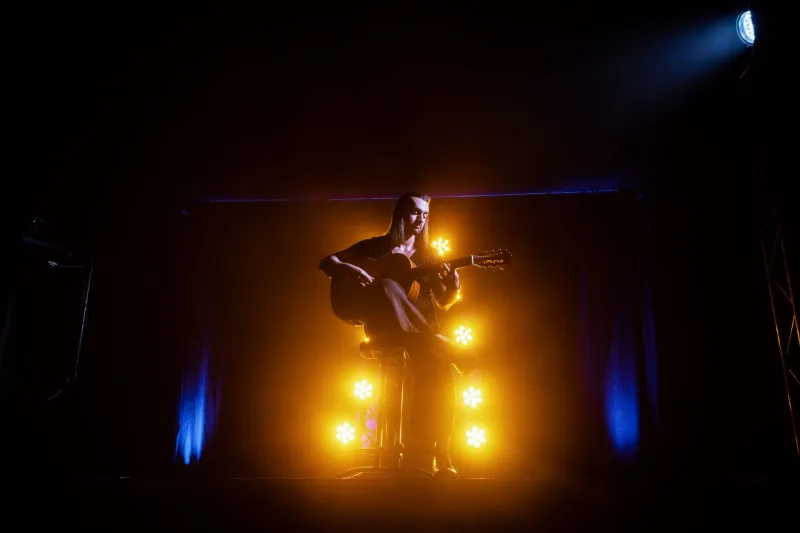
Photo by Photo by The Ridge Ohio on Unsplash on Unsplash
There's a moment — maybe you've had it — where you pull up Spotify, clock that your stream count ticked up at 2:47 in the morning, and just know somebody is out there in the dark, replaying your song. You don't know their name. You don't know their city. But you know they're there, and honestly? That's somehow more unsettling than not knowing at all.
Welcome to the Spotify Stalker Era. Nobody officially named it that, but here we are.
When Streaming Data Became a Window Into Someone Else's Head
For the longest time, music consumption was a private act. You bought a record, you played it in your bedroom, and the artist had absolutely no idea you existed. That was the deal. The parasocial relationship was a one-way street with no return address.
Streaming changed the economics of music. But it also quietly rewired the emotional architecture of the whole thing. Suddenly, artists could see — in real time, or close enough to it — exactly when people were listening, how many times a track got replayed, which cities were bumping their stuff the hardest. Platforms like Spotify for Artists handed musicians a dashboard that turned their audience from an abstract concept into something that looked almost like a surveillance feed.
And fans? They got tools too. Spotify's social features, third-party apps, and the platform's own activity sidebar meant that if you followed someone — or if they followed you back — you could see what they were playing, sometimes almost as it happened.
That's a lot of power to hand to people who are already emotionally invested.
The Artist Side: Obsessing Over Who's Actually There
Talk to any independent artist about their Spotify for Artists dashboard and you'll see one of two reactions: either they've fully detached from it for their own mental health, or they're checking it compulsively at 11pm on a Tuesday, trying to reverse-engineer the life story of whoever just added their deep cut to a playlist called "crying in my car."
The data is seductive because it feels like proof. You made the thing. You put it out. And now here's evidence — cold, numerical, timestamped — that it landed somewhere. A spike in streams from Nashville at 3am. Seventy-two plays from the same account in a single week. Someone in Portland who has apparently listened to your saddest song every single day for two months straight.
For artists without major label machinery behind them, that data isn't just flattering — it's oxygen. It tells them the work matters. It tells them someone out there is paying attention even when the algorithm isn't.
But it also creates a feedback loop that can get genuinely strange. Artists start building parasocial relationships with their own listeners, imagining the person behind the repeat plays, wondering if they're okay, feeling responsible for whoever is using their music to process something painful. The intimacy flows both directions now, even when only one side knows it.
The Fan Side: Listening as a Love Language (or a Red Flag)
If artists are watching their dashboards like hawks, fans have developed their own version of this behavior — and it's arguably weirder.
There's an entire ecosystem of fan behavior built around tracking streaming activity. Some of it is organized: fan bases coordinate mass-streaming campaigns, refreshing stats to watch numbers climb in real time, treating it like a sport with a live scoreboard. Some of it is more personal. People use Spotify's friend activity feature to keep tabs on someone they're interested in — an ex, a crush, a parasocial obsession — reading into every song like it's a text message.
And look, we're not here to judge. We've all been there. You see that someone is listening to a breakup playlist at midnight and suddenly you're constructing an entire narrative about their emotional state from three data points and a song title. That's just human nature wearing a streaming service as a costume.
But the transparency has created some genuinely anxious behavior. People curating what they listen to because they know someone might be watching. Fans feeling a weird mix of validation and violation when they realize an artist can technically see how obsessively they've been replaying a single track. The line between connection and surveillance gets blurry fast when the data is right there.
The Intimacy Nobody Agreed To
Here's what makes all of this genuinely fascinating rather than just a little creepy: none of this intimacy was really negotiated. Nobody sat down and decided that artists should be able to see the emotional patterns of their listeners, or that fans should be able to track each other's music consumption in near real time. It just kind of happened, feature by feature, update by update, until we were all living inside a system that knows too much and shares just enough to make everyone slightly paranoid.
Streaming data has a way of collapsing distance that used to feel important. The artist in their studio and the listener in their apartment were supposed to be strangers connected only by sound. Now there's a dashboard between them. A number. A timestamp. A city.
It's intimate in the way that accidentally reading someone's diary is intimate — not because you were invited in, but because the door was left open.
Does Knowing Change the Listening?
The real question underneath all of this is whether the visibility changes the experience itself. And honestly, it probably does.
Listening to music in private, with no record of it, is a different act than listening to music that gets logged, counted, and potentially seen. There's something that changes when you know the artist might be watching the numbers go up. When you know your ex can see your activity. When you know your replay count is becoming a data point in someone else's story about who their audience is.
Some people find that connection meaningful. The idea that your 2am listening session is being registered somewhere, that it might matter to the person who made the song — that's kind of beautiful if you squint at it right.
Other people find it suffocating. They've turned off every social feature, gone private, stripped the whole thing back to just them and the music, the way it used to be.
Both reactions make total sense. Because the Spotify Stalker Era isn't really about stalking — it's about the strange new intimacy of living in a world where everything leaves a trace, and sometimes that trace finds its way back to you.
The beat drops. Someone somewhere hits repeat. And now, somehow, both of you know it happened.
That's either beautiful or terrifying, depending on what time it is and whose name you're thinking about.