Famous in February, Forgotten by Fall: The Brutal Speed of Blowing Up in 2024
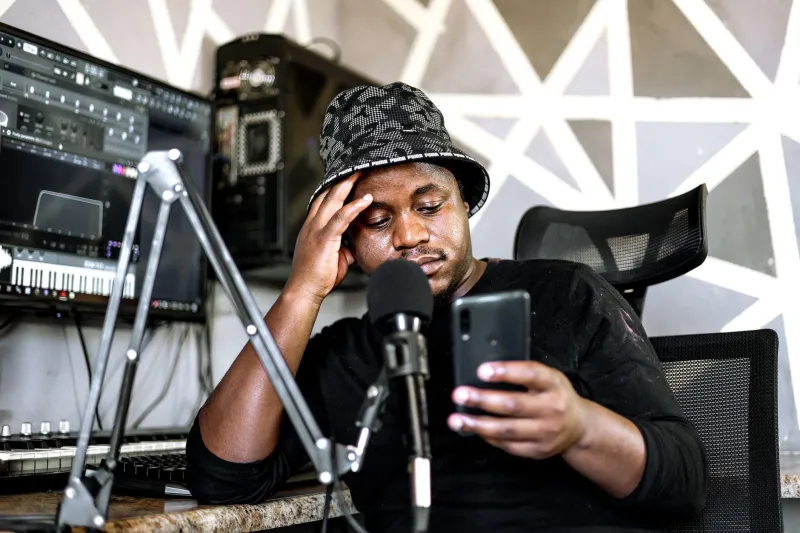
There's a specific kind of vertigo that comes with watching an artist go from 5,000 monthly listeners to 5 million in the span of a month. It's exciting, sure. But there's something almost nauseating about it too — like watching a car accelerate so fast you start wondering if the brakes actually work.
In 2024, this isn't an exceptional story. It's basically the standard one.
The Speedrun Is the New Come-Up
For most of music history, building a fanbase was a slow grind. You played shows, you released music consistently, you got written up in small publications, you toured, you built. The timeline from unknown to genuinely famous was measured in years, sometimes decades. That gradual accumulation wasn't just about exposure — it gave artists time to develop a voice, figure out who they were, and build the kind of deep fan loyalty that survives a bad album or a weird career pivot.
The algorithm doesn't care about any of that.
A 17-year-old posts a 30-second clip on TikTok. The sound gets used in 200,000 other videos within 72 hours. Their Spotify streams go from nothing to several million in a week. Labels are in their DMs before the weekend. They're on a late-night show two months later. And somewhere in the middle of all of this, they're supposed to be figuring out what kind of artist they actually want to be.
The pressure cooker doesn't wait for you to be ready.
When Overexposure Happens Before the Album Drops
One of the stranger dynamics of the current era is how quickly an artist can become oversaturated before they've even released a full body of work. The virality cycle is so compressed that by the time a proper debut album arrives, a significant portion of the potential audience has already cycled through curiosity, peak interest, and mild fatigue.
This is a relatively new problem. In previous eras, the rollout — the slow drip of singles, the press coverage, the radio play — was designed to build anticipation over months. Now the anticipation can peak and crash before the label has even finalized the tracklist.
Artists who broke in this environment talk about it in strikingly similar terms. There's a sense of constantly chasing something that keeps moving. The moment that felt like arrival turns out to be just another checkpoint, and the next one is already expected. The internet that made you famous is also the internet that's already asking what you're doing next before you've had a chance to process what just happened.
The Burnout Is Baked In
Content is the word everyone uses now, and it's doing a lot of damage. When music becomes content, it enters a production logic that music was never designed for. Content needs to be constant, varied, engaging, optimized, and perpetually new. A song is a song — it takes time, emotional investment, and creative energy to make something worth hearing. But the platforms that amplify music don't differentiate between a carefully crafted track and a throwaway video, and audiences trained on algorithmic feeds have attention spans calibrated to match.
The result is that artists are being asked to produce at content speed while their actual creative process operates at music speed. That gap is where burnout lives.
Several artists who broke big in the TikTok era have been public about the psychological toll. The expectation to be constantly visible, constantly releasing, constantly engaging — all while trying to make music that actually means something — is genuinely unsustainable. And when the burnout hits, the algorithm doesn't slow down. It just finds the next person.
One-Hit Wonder Got a Software Update
The one-hit wonder has always existed. But the traditional version had a certain dignity to it — you had a song that connected with millions of people, it had a run, and then you moved on with your life. The song still played at weddings and in grocery stores for decades. People remembered you warmly.
The viral-era equivalent is different in a way that's hard to articulate but easy to feel. When your entire identity gets collapsed into a single sound, a single aesthetic, a single TikTok moment, the expiration date is built into the premise. The algorithm that surfaced you is already looking for the next version of what you represented. And because the rise was so fast and so public, the fall feels proportionally brutal even if the actual numbers are still respectable by any historical standard.
Artists who came up through years of grinding have a certain resilience to bad quarters. They've been through slow periods before and they know they can survive them. Artists who went from nothing to everything overnight have no such reference point. A dip in engagement can feel existential when the only data point you have is the peak.
Is Longevity Even the Goal Anymore?
Here's a question worth sitting with: maybe the speedrun generation isn't failing at the old model of a music career. Maybe they're operating in an entirely different model that the old metrics don't apply to.
For a lot of young artists, the goal isn't a 30-year career with a catalogue that gets reappraised in retrospective thinkpieces. The goal might be to make money, build an audience, create some things you're proud of, and then figure out what's next — whether that's more music or something else entirely. That's not a tragedy. That's just a different relationship with the concept of a career.
The artists who seem to be navigating this era best are the ones who figured out early that they needed to build something more durable than a viral moment. A distinct aesthetic that evolves rather than repeats. A community that feels genuinely invested rather than passively entertained. An artistic identity that's bigger than any single song.
The Clock Is Running
None of this is slowing down. The platforms are optimized for acceleration. The audiences are trained to consume quickly and move on. The labels are chasing the next thing before the current thing has finished its run.
What's actually remarkable is that in the middle of all this velocity, some artists are still managing to build something that lasts. Not by fighting the speed, but by using the initial burst of attention to plant something deeper — something that keeps growing even after the algorithm has moved on.
That's the real skill now. Not going viral. Anyone can go viral. The trick is figuring out what to do with the 15 minutes before they're up.