Building a Playlist for Someone Who Doesn't Know You Exist
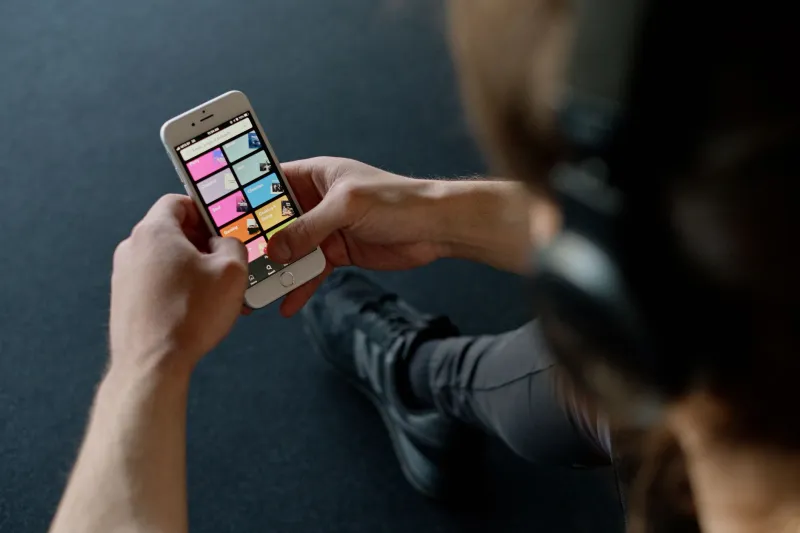
Somewhere right now, a 23-year-old in Columbus, Ohio is dragging a Phoebe Bridgers track into a playlist she built specifically for Zendaya. She's been at it for two hours. She's not getting paid. She's not even hoping Zendaya will see it. She just — needs to do it.
Welcome to one of the quietest, most revealing corners of modern fandom: the celebrity tribute playlist. Part love letter, part personality test, part digital altar. And it is absolutely everywhere.
The Playlist as Portrait
If you dig through Spotify's public playlist ecosystem long enough, you'll find thousands of them. Playlists titled things like Timothée's Autumn, What Harry Styles Hears at 2am, or A Sunday for Sabrina Carpenter. They're not official. No celebrity commissioned them. Most have a few dozen followers, maybe a few hundred if the creator is active on fan Twitter or TikTok.
But the effort that goes into them? That part is serious.
Jasmine T., a 21-year-old college student from Atlanta who asked that her last name not be used, has built seven playlists dedicated to different celebrities over the past three years. Her most elaborate one — a 94-song collection she made for actress Sydney Sweeney — took her the better part of a month to assemble.
"I wasn't just throwing songs in," she explained over DM. "I was thinking about her interviews, the way she talks about her childhood in Washington, the vibe of her Instagram. I wanted it to feel like her inner world, even though I obviously don't know what that actually is."
That gap — between what's imagined and what's real — is exactly what makes this phenomenon so fascinating.
When Streaming Became a Love Language
The parasocial relationship isn't new. Fans have been writing letters to celebrities, decorating bedrooms with posters, and mentally rehearsing conversations with people they'd never meet since long before the internet. What's changed is the medium.
Spotify gave fans a creative tool that feels both personal and shareable. A playlist is intimate in a way a fan account isn't. It communicates interiority — this is how I imagine you feel — rather than just admiration. And because music carries so much emotional weight, building a playlist for someone becomes an act of emotional projection that can feel surprisingly profound.
Dr. Lauren Embry, a psychologist who studies digital behavior and parasocial dynamics at a mid-sized university in the Midwest, says the behavior fits neatly into what researchers already understand about parasocial bonds.
"People develop genuine feelings of connection with public figures they follow closely," she said. "The parasocial relationship feels real because the emotional investment is real. Creating a playlist is a way of externalizing that investment — making something tangible out of a connection that only exists on one side."
What's interesting, she adds, is that the act of creation can actually deepen the parasocial bond rather than satisfy it. "You spend hours imagining someone's inner life, and by the end you feel like you know them better. But you've really just gotten to know your own projection of them better."
The TikTok Pipeline
These playlists don't always stay private. A growing corner of TikTok and Instagram Reels is dedicated to creators showing off their celebrity playlists — walking through the tracklist, explaining why each song fits, defending their choices in the comments. The format has its own vocabulary now. Fans debate whether a particular artist would be more of a "Frank Ocean person" or a "Tyler, the Creator person." They argue over whether a celebrity's public persona matches their supposed taste.
It's music criticism filtered entirely through celebrity fandom, and it has a surprisingly engaged audience.
Marco R., 19, from Phoenix, has amassed nearly 40,000 TikTok followers posting exactly this kind of content. His most-viewed video — a breakdown of a playlist he built for Bad Bunny, ironically — got over 200,000 views.
"People go crazy in the comments," he said. "Half of them are like, 'omg yes, this is so him,' and the other half are like, 'he would never listen to this.' It becomes a whole conversation about who the celebrity really is, what they're actually like. Nobody knows. That's kind of the point."
The unknowability is the engine. Because no one has the definitive answer, every interpretation is valid. Every playlist is an argument. And arguments, on social media, are engagement.
Devotion or Displacement?
It would be easy to write this off as parasocial behavior gone a little sideways — fans so absorbed in celebrity culture that they're essentially doing emotional labor for people who'll never benefit from it. And there's something to that read.
But Dr. Embry pushes back on the purely pathological framing. "For a lot of people, especially younger fans, these playlists are genuinely creative acts. They're developing taste, learning to articulate emotional associations with music, building community with other fans. The celebrity is almost like a prompt — a starting point for self-expression."
Jasmine agrees. "Making that Sydney Sweeney playlist taught me a lot about what music I actually connect with. I was pulling songs I'd never have put on my own playlist because I thought they fit her. But I kept coming back to them. Some of those songs are my favorites now."
There's something almost poetic about that — a parasocial relationship accidentally becoming a path to self-discovery. The celebrity as mirror.
The One-Sided Concert
Still, there's a melancholy undercurrent to all of it that's hard to shake. These playlists are gifts with no recipient. They're conversations where only one person is talking. The creator pours time and taste and genuine emotional energy into something that, statistically, their subject will never encounter.
And yet — occasionally, they do. Fans have screenshotted moments where a celebrity reposted a playlist made for them, or mentioned in an interview that they found a random fan's music curation weirdly accurate. Those moments go viral instantly, because they represent the parasocial dream: the wall breaking down, the one-sided becoming mutual, even briefly.
Most of the time, though, the wall stays up. And the fans keep building playlists anyway.
Maybe that's the most honest thing about modern fandom: the devotion doesn't require reciprocity to feel worth it. The act itself is the point. The playlist exists. The feeling was real. Someone, somewhere, spent a Tuesday night thinking deeply about what music would soundtrack a stranger's inner life — and found something meaningful in the process.
In the streaming era, that's its own kind of connection. One-sided, sure. But genuine.